
The Real Cost of Moving in Melbourne: A Practical Guide
Two Melbourne removalists can look at the same three-bedroom house, drive the same route, and hand you quotes several hundred dollars apart. Published guides suggest local moves commonly fall between $400 and $2,000+ depending on home size, with full packing and regional runs sitting above that, but treat those as rough planning figures, not verified price data. Access, volume and packing shift the final number far more than kilometres alone.
The removalist invoice is only one part of the total cash needed to relocate. Bond timing, rent overlap, utility connections and short-term storage all pull from the same budget, even when the truck trip is short. A cheap quote can still leave you scrambling if those costs land at once.
The fix is a fixed written quote built on real access details, like stairs, lift bookings and long carries, rather than an hourly guess that grows on the day.
Table of Contents
- Why Three Quotes Never Match on a Melbourne Move
- The Five Price Drivers Behind Every Moving Quote
- Fixed Written Quotes Versus Hourly Rates in Melbourne
- Realistic 2026 Price Ranges for Melbourne Moves
- What a Walkthrough or Video Assessment Actually Looks For
- How to Get an Accurate Quote You Can Actually Trust
- Your Pre-Move Cost Checklist and Next Steps
Why Three Quotes Never Match on a Melbourne Move
You're at the kitchen bench with three quotes open. One looks manageable, another is several times higher, and the third gives you an hourly rate that sounds appealing until you wonder how long loading will take. That difference doesn't automatically mean someone's overcharging. It often means the companies are pricing different assumptions about your belongings, access and the work involved.

A moving quote is really a price for volume, access, time and risk. A removalist needs to know how much furniture and how many boxes must be loaded, how far the crew will carry them, whether there are stairs or lift bookings, and whether anything needs extra protection. The same suburb-to-suburb route can be straightforward from a ground-floor house and slow from an apartment with a distant loading bay.
The quote can also depend on what you've asked the crew to do. A transport-only price isn't comparable with one that includes packing. A company that's inspected the access may include time and labour another mover hasn't accounted for. The cheaper figure might be accurate for a simple move, or it might be an hourly estimate that grows when the truck is waiting for a lift.
Don't compare totals until you've compared scopes. A low estimate isn't a bargain if the job details are missing and the final bill changes once the crew starts loading.
Before booking, ask each removalist to price the same inventory and access conditions. Include stairs, lift arrangements, parking distance, packing and specialty items. If you're moving within Melbourne, a local Richmond removalist is one example of a service to compare, but apply the same written-scope test to every provider.
The Five Price Drivers Behind Every Moving Quote
Think of a moving quote like a taxi fare with luggage, waiting time and extra stops. The trip matters, but so does everything that happens before the vehicle reaches the destination. These are the main factors a removalist needs to price.
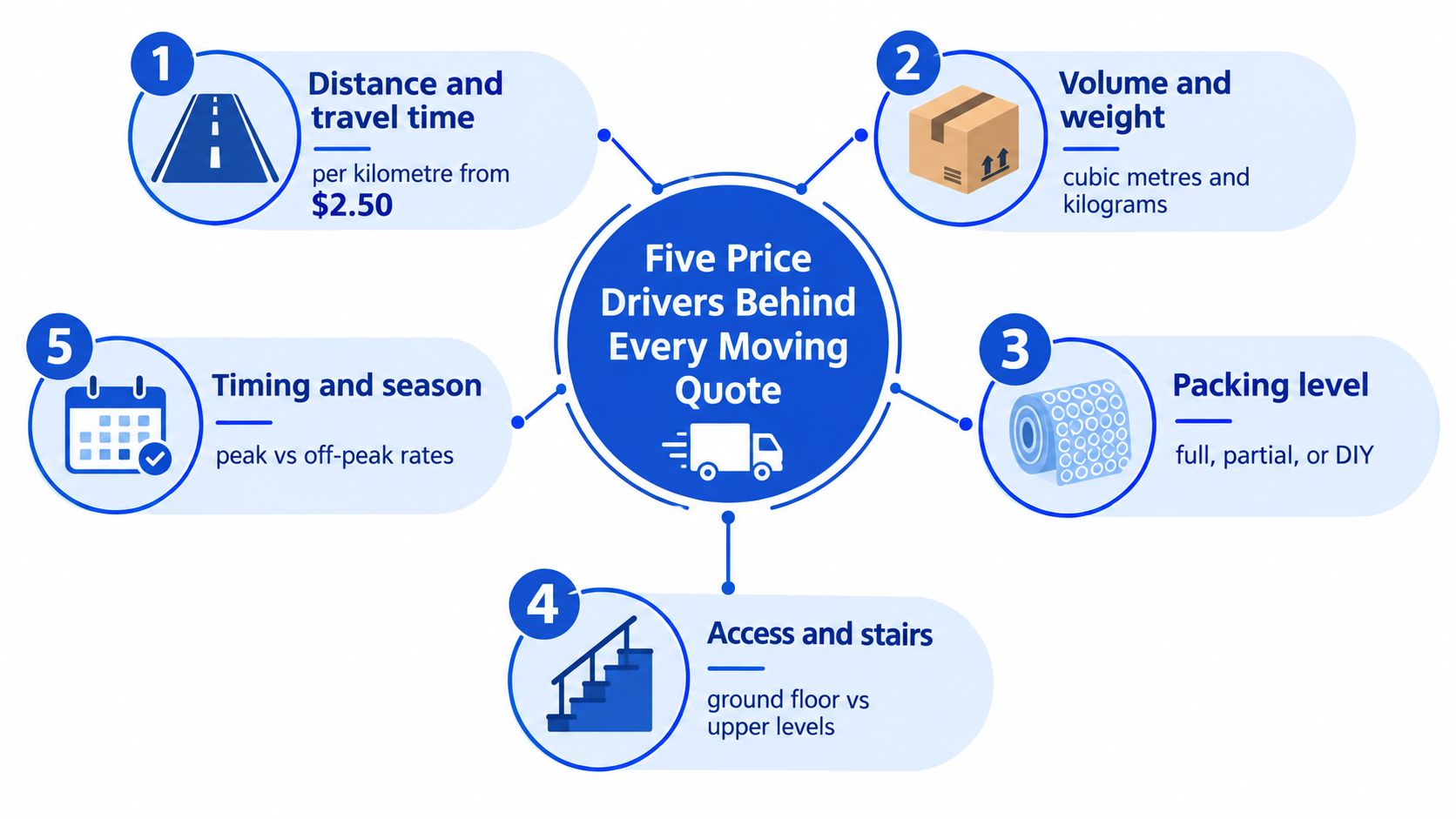
Distance and travel time. The route affects vehicle time, but kilometres don't tell the whole story. Traffic, parking searches, loading delays and whether the crew must return for another load can change the work involved. A move to regional Victoria adds travel time and vehicle kilometres, so make sure the quote states how travel is handled.
Volume and weight. A home with bulky furniture, packed cupboards and a full garage takes more truck space and handling time than a lightly furnished one. Give the assessor a realistic inventory, not just the number of bedrooms.
Packing. Decide whether you'll pack everything, ask the crew to pack selected rooms, or book a full pack. Packing changes the scope because the crew must supply or handle materials and spend time preparing items for transport.
Specialty items. Pianos, antiques and artwork may require extra protection, careful handling or custom crating. Mention them before the quote is prepared. A mover who learns about a difficult item on moving day may need to revise the plan.
Storage. If your move-out and move-in dates don't line up, the job may involve holding belongings between addresses. Confirm how storage is priced and whether it includes collection and later delivery. If you're weighing up options, compare the scope with these Melbourne storage prices and options.
Here's a look at how those factors combine in a moving plan:
A written quote should turn the relevant drivers into visible line items, such as base transport, packing, specialty handling and storage. If access conditions or requested services aren't listed, ask what the price assumes. An unexplained omission is a reason to clarify the quote, not a detail to leave until moving day.
Fixed Written Quotes Versus Hourly Rates in Melbourne
An hourly rate can be sensible for a small, clearly defined job. For a full home or office relocation, it can leave you carrying the risk of every delay the estimate hasn't accounted for.
| Pricing model | Works best when | What to check |
|---|---|---|
| Hourly estimate | The job is small, access is simple and the scope is clear | What time starts and stops, and how waiting, travel and access delays are treated |
| Fixed written quote | The mover has assessed the load and both addresses | Whether the price lists the agreed inventory, access, packing and extras |
The hourly number can look cheaper on paper. But stairs, a long carry from the truck, a lift wait or a parking search all take time. If those conditions haven't been assessed, you may pay for them through a longer job. A variable estimate can work in your favour when the move is tidy and efficient, but it can be unforgiving when an apartment or office has complicated access.
A fixed quote shifts the focus to getting the scope right before the crew arrives. It shouldn't just say “move house.” Ask for a clear base-move line, a separate packing line, a separate line for specialty items, and a written description of access constraints at both ends. If the scope changes, the mover should explain the impact and get your agreement before doing additional work.
For a full-home move, choose certainty over a low hourly figure you can't confidently budget against.
Hourly work isn't automatically a bad choice. It can suit a few large items or another small job where the inventory, route and access are straightforward. For a whole house or commercial relocation, compare fixed written scopes first. The right pricing model depends on the move, not on which removalist advertises the lowest starting figure.
Realistic 2026 Price Ranges for Melbourne Moves
No published range can tell you what your move will cost, because access, inventory and packing scope vary too much between homes. Use this table as a working checklist: give each removalist the same details, then ask them to price a low, expected and high scenario with the triggers written down.
| Move type | What usually moves the number | Put this in the quote |
|---|---|---|
| Studio or one-bedroom apartment | Lift booking, stairs, long carry, parking near the entrance | Lift window, carry distance, parking plan and any waiting charge |
| Two-bedroom home | Volume, disassembly, balcony or hallway access | Inventory count, bulky items, access at both addresses |
| Three-bedroom home | Load size, garage and outdoor items, specialty pieces | Piano or pool table handling, packing scope, excluded items |
| Four-plus-bedroom family home | Labour hours, multiple large items, packed storage areas | Crew size, estimated hours or fixed scope, second truck trigger |
| Full packing service | Rooms, breakables, carton supply, unpacking level | Which rooms are packed, materials, fragile item handling |
| Regional Victorian move | Route, travel time, overnight needs, access at delivery | Travel pricing, fuel or toll treatment, delivery window |
| Office relocation | Equipment, labels, lift rules, after-hours scheduling | IT handling, floor plan, loading dock booking, downtime plan |
Keep the removalist invoice separate from the cash needed to relocate. Bond, rent overlap, utility connections, cleaning and storage can sit outside the truck and labour line. If settlement dates do not line up, price storage in Melbourne before you lock the moving date, including collection and redelivery.
A three-bedroom house with a partial pack and a piano shows why generic ranges fail. The written quote should name the inventory, state who packs which rooms, list the piano handling, describe access at both ends and separate any storage or travel component.
A wide gap between low and high usually means access is still guessed. Ask what pushes the job to the high case: lift outage, no loading zone, third-floor stair carry or a packed garage. If the mover cannot name the triggers, keep asking.
What a Walkthrough or Video Assessment Actually Looks For
A credible assessment isn't a quick look at the lounge and a guess. The removalist needs to understand what's being moved and how the crew will get it from each room to the truck, then from the truck into the new place.
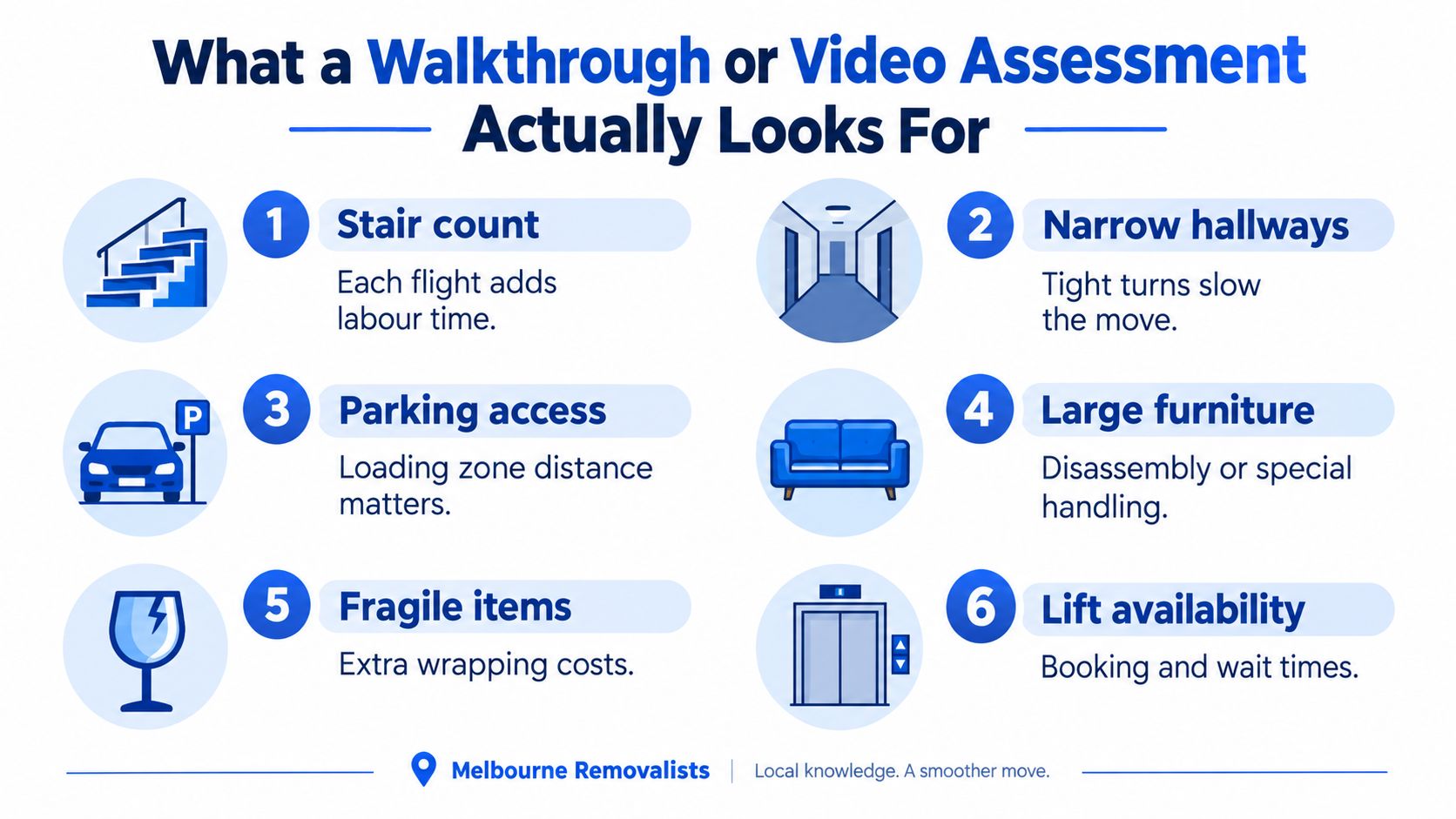
At a Melbourne apartment, show the assessor the full route: the front door, hallway turns, stairs or lift, building loading area and likely truck parking spot. Note the lift booking window and whether the building has rules for loading docks. A small lift or a long walk from the kerb can affect how the crew plans the job, even if the apartment itself isn't large.
The assessment should also cover awkward furniture, narrow doorways, fragile items and anything needing disassembly or special protection. At the destination, show the same details. A clear path out of the old home doesn't help if the new building has a restricted loading area or a different access route.
When video is enough
For many household moves, a video walkthrough works if you show every room, storage area and access point, then answer questions about the inventory. Don't pan quickly past a packed garage or cupboard. If it's included in the move, it needs to be visible in the assessment.
Some jobs deserve an in-person visit. An office with servers, a piano in a heritage home, or an apartment with strict loading-dock rules may need closer inspection. The assessor can then record what affects crew size, handling and timing rather than leaving those decisions until the truck arrives.
A useful written quote names the details the assessment found, including stairs, carrying distance, lift arrangements and items requiring special handling. That written record is what lets you challenge a surprise charge: it shows what the mover saw and agreed to price.
How to Get an Accurate Quote You Can Actually Trust
Start by asking removalists how they price the job. Find out whether they offer a fixed written quote after an assessment or an hourly estimate, and ask what can change the price. Request details about insurance, who'll do the work, and whether storage is available if your dates don't line up.
Prepare for the assessment before booking. A rough inventory is enough to start, as long as you include garages, sheds, balconies and packed storage areas. Show access at both addresses, explain parking arrangements, flag lift bookings and point out pianos, artwork, antiques or other items needing particular care.
Then compare each quote line by line. A quote that includes packing isn't directly comparable with a transport-only price. Check which tasks are included, how access is described, what's excluded, and how storage or additional work would be handled. Ask the mover to clarify any language that could leave you exposed to extra charges.
Watch for missing details
A verbal estimate gives you little to rely on if there's a disagreement about the agreed scope. Be cautious if a provider asks for a cash-only deposit or refuses to provide insurance certificates when you request them. Don't assume the cheapest quote has the same crew, protection or services as a more detailed one.
Look for a written scope, a named point of contact, a clear crew and vehicle plan, and an agreed process for approving changes. Some Melbourne removalists, including House Moving Melbourne, offer written quotes after a pre-move assessment and provide a contact for coordinating the move.
Your shortlist should match your situation. Renters should pay close attention to timing, access and storage. Downsizers may need packing and careful handling, while an office move needs a plan for equipment, labelling and reassembly. For specialty items, ask directly how the mover intends to protect and transport them.
Your Pre-Move Cost Checklist and Next Steps
Don't budget from the truck price alone. Separate the removalist invoice from the other cash you may need around moving day, including a new bond, rent overlap, utilities and storage. Consumer Affairs Victoria explains that a residential bond is generally capped at one month's rent, is separate from rent, and may be transferable through the Portable Rental Bond Scheme for eligible renters. Check the bond amounts and payment rules for Victorian rentals before assuming your old bond will be available in time.
For the removalist side, use this checklist before you confirm a date:
- Inventory: Include furniture, boxes, garage contents and anything needing special handling.
- Access: Photograph stairs, narrow turns, lift areas and the route from truck to door.
- Parking: Confirm loading arrangements and whether permits or building approvals are needed.
- Lift booking: Check the building's booking window and tell the mover.
- Packing scope: Decide what you'll pack and what you want the crew to handle.
- Storage and dates: Sort out storage early if settlement or lease dates don't align.
- Insurance and quotes: Request insurance certificates and compare at least two written quotes with matching scopes.
- Utilities and supplies: Notify utility providers as required when you leave, following Consumer Affairs Victoria's guidance on utilities. If you need supplies, check options for where to get moving boxes.
This week, prepare the inventory, take access photos and book assessments with removalists who'll put the scope in writing. The cheapest move on paper isn't always the easiest to budget for. A well-planned move is the one that costs what the written quote says it will.
If you're planning a Melbourne or regional Victorian move, House Moving Melbourne offers residential and commercial relocations, packing, specialty-item handling and storage, with written quotes based on an assessment. Arrange a walkthrough and request a clear scope before you book.