
10-Step Moving Out Checklist for Melbourne Renters
Moving out often starts with a date on the calendar and a growing list of loose ends. You might be waiting on a new lease, trying to book a removalist, or wondering whether the agent expects you to arrange the final inspection. The risk isn't just a stressful moving day. A missed notice, unrecorded meter reading or poorly documented handover can leave you dealing with avoidable costs and disputes after you've left.
This Melbourne moving out checklist follows a practical Victorian timeline, from confirming your tenancy end date and booking access through to cleaning, the final inspection, bond evidence and key return. It's designed for moves across Melbourne and regional Victoria, including local moves where the new home is only a short drive away. Australia's 2021 Census found that 40.7% of Australians had changed address in the preceding five years, and most of those moves were within the same state, so address updates and departure-and-arrival arrangements matter even when you aren't relocating interstate (Australian Bureau of Statistics Census snapshot).
Use the suggested lead times as planning prompts, then check your lease and confirm requirements with your agent or landlord. Give every task an owner and a deadline, and keep written proof of what you've completed.
Table of Contents
- 1. Confirm Lease End Date and Notice Requirements
- 2. Book the Removalist and Arrange Building Access
- 3. Declutter, Donate, and Dispose of Unwanted Items
- 4. Pack Room by Room with Clear Labelling
- 5. Transfer or Cancel Utilities and Services
- 6. Update Your Address with Key Organisations
- 7. Clean the Property to the Exit Standard
- 8. Complete the Exit Condition Report and Bond Process
- 9. Arrange Storage for Gaps Between Settlements or Leases
- 10. Final Walkthrough, Key Return, and Post-Move Checks
- 10-Point Moving Out Checklist Comparison
- Turn the Checklist into a Completed Handover
1. Confirm Lease End Date and Notice Requirements
Six to eight weeks before moving, check your tenancy agreement and confirm the date your rental ends. For a fixed-term agreement, verify its end date. For a periodic agreement, check the notice requirements that apply to your situation. Consumer Affairs Victoria's renters guide sets out the notice periods that apply when ending an agreement. Confirm the required notice period and how to deliver it with your agent or landlord before setting your handover date.
Set the date in writing
For example, a renter in Footscray on a periodic agreement should confirm the intended departure date, give notice in the required form, and keep proof of delivery. Ask the agent to confirm the tenancy end date, final inspection arrangements and key-return process. Returning the keys alone does not confirm that rent has ended.
Record the confirmed date in your moving timeline. If settlement or access to your next home is uncertain, avoid agreeing to a handover date that leaves you without somewhere to stay or keep your belongings. If the gap is longer than a few days, short-term storage (covered in step 9) or temporary accommodation is safer than an informal lease extension.
Practical rule: Keep your notice, the agent's acknowledgement and any later date changes together. After a phone call changes the plan, ask for the revised agreement in writing.
Once the likely move date is clear, you can start organising the move, but make any booking terms reflect uncertainty about settlement or access. Keep the notice and agreed dates on file. They give you a clear record of when the tenancy ends and the handover is due.
2. Book the Removalist and Arrange Building Access
Once you have a workable date, secure the crew and the building arrangements together. For a Melbourne apartment, that means asking the building manager about lift reservations, loading zones, access hours and any protection requirements before moving day. A removalist can't make an unbooked lift available or park a truck where the building prohibits it.
Confirm the job details before booking
Arrange an in-person or video walkthrough so the removalist can assess stairs, doorways, parking, long carries and items that need special handling. Ask for a fixed written quote that lists the agreed scope and any extras, such as packing, lift waits or handling a piano. If your building manager requires insurance documentation, request the certificate early and send it in before the move.
A Melbourne CBD office moving after hours on a Friday, for example, needs its lift booking and loading dock slot confirmed with the building manager as part of the move plan. Tell the removalist how desks, files and equipment should be labelled and where furniture needs to go at the destination, so staff can resume work without sorting an unmarked load.
For residential moves, compare Melbourne removalist services and give the provider an accurate inventory. Mention artwork, antiques and other fragile or bulky items during the walkthrough, not on the day the truck arrives.
- Confirm access: Get the lift, loading dock and parking arrangements in writing.
- Check quote scope: Make sure the quote reflects the walkthrough and the services you've requested.
- Coordinate timing: Tell the agent, building manager and removalist the same confirmed move date.
3. Declutter, Donate, and Dispose of Unwanted Items
Don't pay to move things you've already decided to discard. Start sorting before packing, while you can still arrange donations, sales, recycling or council collection without blocking the hallway with half-filled boxes. Separate belongings into keep, donate, sell, recycle and dispose groups, and deal with each group promptly.

Give each pile a clear destination
A downsizer in Kew might sort furniture for donation, list usable items for sale and take paint or electronics to an appropriate council drop-off. Check your local council's hard-rubbish rules and collection process, along with suitable e-waste or hazardous-waste options. Don't assume that an item is safe to leave on the nature strip or put on the removalist's truck.
Keep a marked donation box near the exit and set a specific drop-off plan. If items are still sitting in the house on moving day, they can be mistaken for belongings to pack or become a last-minute disposal problem. For hazardous materials such as chemicals or gas bottles, check the relevant disposal instructions instead of putting them with ordinary household waste.
A simple sorting routine makes decisions easier:
- Keep: Items you'll use and have space for at the new address.
- Donate or sell: Usable goods you're ready to pass on.
- Recycle or dispose: Items that need an approved local collection or drop-off.
Decluttering also gives you a more accurate inventory for the removalist. Tell the crew what is staying, what is going and what requires special handling, then remove the donation and disposal piles before the final packing run.
4. Pack Room by Room with Clear Labelling
Pack by room so every box has a destination and you can spot missing essentials quickly. Start with items you won't need before the move, then leave daily-use belongings and cleaning supplies accessible until the final stretch. Label each box with its destination room and a short contents description, and write on more than one side so the label remains visible when boxes are stacked.
Protect fragile and high-value belongings
A family with framed artwork and a grandfather clock, for example, can pack everyday bedroom items themselves and arrange specialist packing or crating for the pieces that need more protection. Photograph cable connections before disconnecting electronics. Keep passports, tenancy documents, medication and valuables with you rather than packing them into the truck.
Pack heavy items in smaller boxes and light items in larger ones. Mark boxes that must stay upright or need careful handling, and keep an inventory of valuable items. If you need supplies, use this guide to find moving boxes in Melbourne.
Set aside an essentials box or bag for the first night. Include chargers, basic toiletries, a change of clothes, kettle or simple kitchen items, and the paperwork you'll need during the handover. Label it clearly and transport it in your own car if possible, so it doesn't disappear behind furniture and cartons.
Before the crew arrives, walk through each room and check that the labels match the destination plan. Tell the movers which boxes are fragile and where each room's load should go. Clear instructions at pickup make delivery and unpacking more orderly.
5. Transfer or Cancel Utilities and Services
Six to eight weeks before moving, confirm the end date on your lease and check the service arrangements for both addresses. Contact electricity, gas, water, internet and phone providers to set the old service end date and the new service start date. Ask whether the new property needs a technician visit or a new connection, and book it early.
Record final readings and account details
For a Richmond renter, that could mean booking internet activation at the new address while setting a disconnection date with the current provider. Ask each provider how it handles final meter readings and closing bills. On departure, photograph any accessible meters and save the images with your move records.
Water arrangements depend on the retailer serving each property. Confirm the correct provider for both addresses and ask what steps apply when the old account closes. Use this checklist to confirm the details:
- Electricity and gas: Ask the retailer when to take the final reading and confirm the new account's start date.
- Water: Contact the property's water retailer and check the final account process.
- Internet and phone: Confirm installation or activation dates, and ask how to return any provider equipment.
Save confirmation emails and reference numbers. Check your plan terms for charges tied to ending or changing a service. Keep power and water connected at the old home until cleaning and the exit inspection are complete, unless your agent confirms they can be disconnected earlier. At least a week before handing back the keys, verify that each provider has recorded the correct dates and address. This leaves time to fix a missed booking before the move.
6. Update Your Address with Key Organisations
Address changes are easy to postpone, but a missed bill or official notice can create a problem after you've left. Make a list of organisations that use your old address, then update each account and save the confirmation. Start with government services, financial institutions, your employer, insurers and healthcare providers, then work through subscriptions and regular deliveries.
Use a written address-update list
A family moving within Melbourne might update licence and vehicle details through Service Victoria before moving, arrange mail redirection through Australia Post and then work through bank, superannuation, insurer and subscription accounts. Don't assume one update changes every record. Check each organisation's own process and confirm the new address appears in your account.
Services Australia says it must be notified within 14 days of moving, so include that deadline in your post-move task list (myGov guidance on moving house). Mail redirection can help catch correspondence while you update individual senders, but it doesn't replace telling organisations directly.
Keep the process manageable by grouping updates:
- Government: Services Australia and any other relevant government accounts.
- Money and work: Bank, super fund, employer and tax-related accounts.
- Protection and health: Insurer and healthcare provider records.
- Regular deliveries: Subscriptions, online retailers and service accounts.
Review the list again after you've moved. A final check of saved account details can catch a forgotten insurer or recurring bill before the next statement goes to the old property. Store confirmation emails in the same folder as your tenancy and handover documents.
7. Clean the Property to the Exit Standard
Finish cleaning after the furniture and boxes are out, when floors, corners and spaces behind appliances are accessible. Check the entry condition report and your agreement before arranging the work. Your cleaning duties depend on the agreement, the property's condition and the applicable rules, as set out in Consumer Affairs Victoria's renters guide.
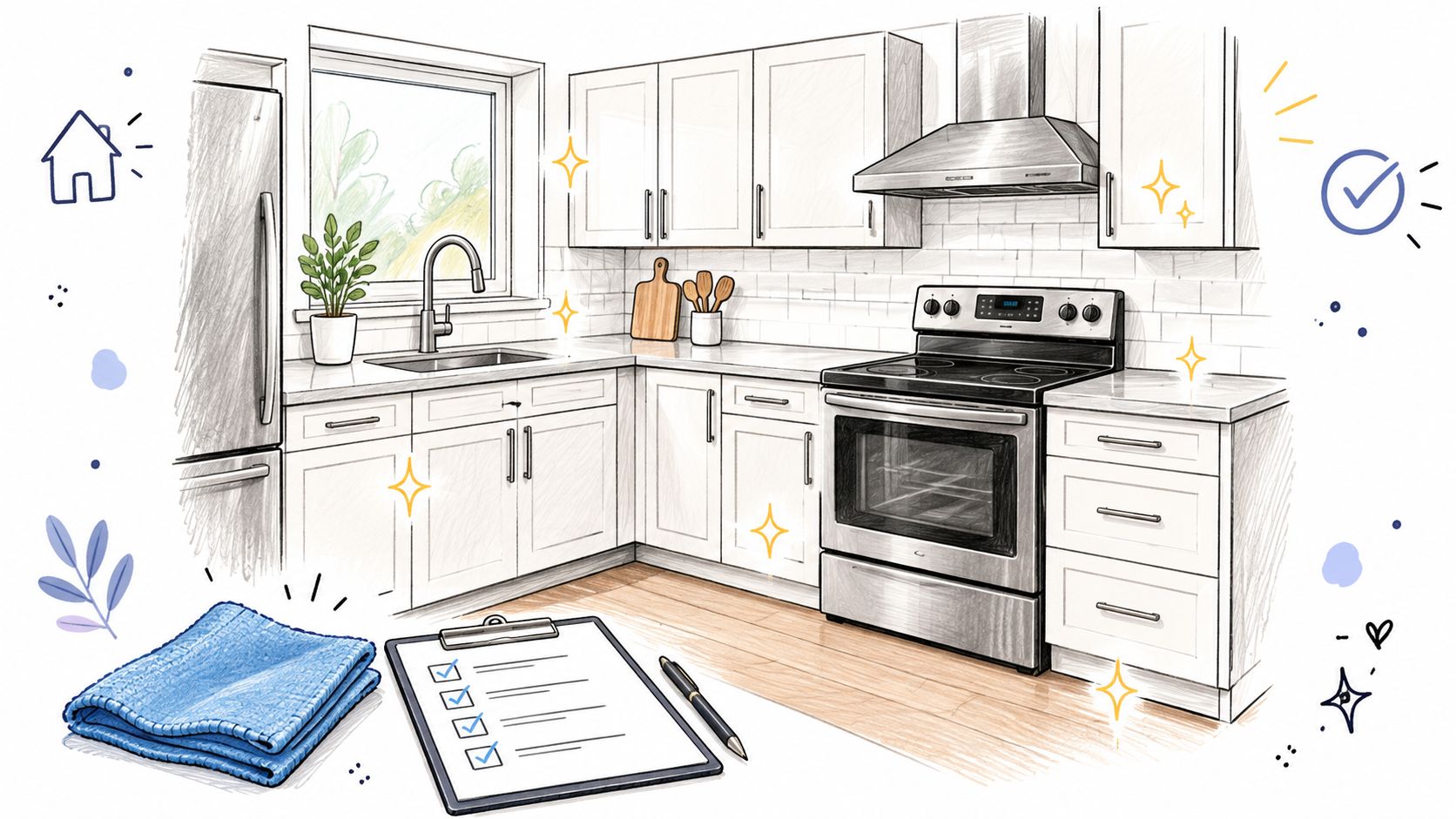
Clean to match the agreement and condition evidence
In the final week, book an end-of-lease cleaner for after the move, or set aside time to clean room by room. For example, a renter in Brunswick can photograph each finished room and keep the cleaner's receipt. Compare marks and defects with the entry report before deciding whether they need attention. Ordinary wear and tear is not tenant-caused damage. Ask the agent about disputed items instead of assuming you are responsible.
Work through the kitchen, bathrooms, floors, windows, walls and appliances. Clean drawers and cupboards, remove rubbish and belongings, and complete any agreed repairs. Housing Victoria's moving-out guidance also covers cleaning internal areas and cupboards, removing unauthorised fittings and unwanted items, and completing the final inspection and key return.
Before the inspection: Photograph the empty property after cleaning. Keep receipts for professional cleaning or treatments, and save any written agreement about repairs or items the agent asked you to address.
If you have booked a cleaner, confirm the access arrangements and the tasks included before they arrive. Inspect the property yourself once the work is done. A receipt helps document the clean, but check that the finished work meets your agreement. Take care of this before the exit inspection, so you have time to address anything missed.
8. Complete the Exit Condition Report and Bond Process
Treat the exit inspection as a documented comparison with the entry condition report, not a quick look around before you hand over the keys. Take dated photos or video of each room, including cupboards, appliances, floors and existing marks. Attend the inspection if you can, and ask for a copy of the completed exit report.
Keep the bond trail complete
A renter in St Kilda, for example, can compare move-in photos and the entry report with the exit evidence, then raise a specific disagreement about a carpet stain rather than disputing the entire report. If you and the rental provider agree on the bond outcome, follow the Residential Tenancies Bond Authority process and enter payment details carefully. If you don't agree, keep correspondence and seek advice on the available dispute process.
Consumer Affairs Victoria says the maximum bond is generally one month's rent unless the rent exceeds $900 per week. It also says rental providers generally must start a bond claim within 14 days after the agreement ends, unless the renter initiates the claim first (Consumer Affairs Victoria's guidance on ending a co-renting arrangement). Add a dated follow-up to your calendar rather than assuming the bond will be returned automatically.
Your evidence file should include:
- Condition records: Entry report, exit report, dated photos and video.
- Cleaning and repair records: Receipts, completed work and written agreements.
- Bond records: RTBA communications, claim details and relevant correspondence.
Keep the tone factual if you challenge an item. Identify the room, the specific condition and the evidence you're relying on. A clear record helps you respond to a bond query without trying to reconstruct the move from memory.
9. Arrange Storage for Gaps Between Settlements or Leases
If your next home won't be ready when the tenancy ends, plan where your belongings will go before the truck arrives. Confirm storage dates, access arrangements and delivery plans with the provider, and keep your own inventory of what goes into storage. This is especially important when a settlement date changes or the new property needs work before furniture can be delivered.
Match storage to the items
A homeowner in Ringwood whose next property isn't ready could move furniture into storage, then schedule delivery once the settlement date is confirmed. Ask whether the facility is climate-controlled if you're storing wooden furniture, artwork, antiques or electronics. Photograph items before they go into storage and label the inventory so you can identify boxes and furniture later.
Explore climate-controlled storage options if your belongings need protection while you wait for access to the new property. Ask for written details of the storage period, the included handling arrangements and how changes to the delivery date are managed. Keep essential documents, medication and items you'll need during the gap with you instead of placing them in long-term storage.
Before the move, confirm that the removalist and storage provider have the same plan for collection and delivery. Tell the crew which items are going into storage and which are travelling directly to your new address. That distinction prevents a necessary item from being packed into the wrong load.
10. Final Walkthrough, Key Return, and Post-Move Checks
After the removal truck is empty, walk through the property before handing it back. Check each room, cupboard and outdoor area, including the garage, mailbox, shed and storage cage. Take dated photos or video of the vacant property, record the final meter readings and confirm the agreed cleaning and inspection steps are complete.
Make the handover traceable
In Port Melbourne, a commercial tenant can complete the walkthrough with the building manager, return access cards and keep a signed handover record. For a rental, return every key, remote and access card using the method agreed with the agent. Ask for written acknowledgement, then keep the receipt or email with the condition report.
Housing Victoria's guidance includes disconnecting services, locking windows and doors, completing the final inspection and returning keys. Follow the agreed handover process and keep proof that each step is complete.
- Before you leave: Check every storage area, photograph the empty property and record meter readings.
- At handover: Return keys and access devices, then save written confirmation.
- After delivery: Check the load against your inventory. Report any damage promptly in writing, with photos.
At your new address, confirm the delivery is complete and inspect fragile or high-value belongings. Keep the removalist's paperwork, and report concerns through the provider's stated process. Use one contact for the job to resolve missing items or damage quickly.
10-Point Moving Out Checklist Comparison
| Moving Task | 🔄 Implementation Complexity | ⚡ Resources & Timing | 📊 Expected Outcome | 💡 Ideal Use Case | ⭐ Key Advantage |
|---|---|---|---|---|---|
| Confirm Lease End Date and Notice Requirements | Low; check agreement and give written notice | Lease details; confirm dates before booking the move | Clear tenancy end date and documented notice | Renters ending a fixed-term or periodic tenancy | Helps avoid extra rent and anchors the moving timeline |
| Book the Removalist and Arrange Building Access | Medium; coordinate mover, building, and permits | Written quote, access details, lift/loading bookings; book early, especially for peak periods | Confirmed mover and access plan | Apartment, CBD, or complex moves | Reduces scheduling clashes and unexpected costs |
| Declutter, Donate, and Dispose of Unwanted Items | Medium; sort and arrange disposal | Time to sort; council, recycling, and charity services; start several weeks ahead | Fewer items to pack and transport | Moves involving accumulated belongings or downsizing | Can reduce moving volume and landfill |
| Pack Room by Room with Clear Labelling | Medium; organise, pack, and label systematically | Boxes, packing materials, labels, and optional professional packing | Easier unpacking and clearer item tracking | Households or offices seeking an organised move | Reduces misplaced items and supports careful handling |
| Transfer or Cancel Utilities and Services | Low to medium; contact multiple providers | Account details, meter readings, and connection dates; arrange transfers in advance | Services closed at the old address and ready at the new one | Moves where uninterrupted utilities or internet are needed | Helps prevent service gaps and inaccurate final bills |
| Update Your Address with Key Organisations | Medium; update accounts individually | Account list and confirmations; allow time for government and service updates | Mail and records directed to the new address | Anyone changing residence | Reduces missed notices and keeps records current |
| Clean the Property to the Exit Standard | Medium; thorough cleaning across the property | Cleaning supplies or professional cleaner; clean after belongings are removed | Property cleaned for final inspection | Renters preparing to hand back a property | Supports a clear bond assessment and documented handover |
| Complete the Exit Condition Report and Bond Process | Medium; document condition and agree on bond handling | Entry report, dated photos, correspondence, and RTBA process | Bond release by agreement or dispute referral if needed | Victorian renters completing a tenancy | Creates a documented basis for bond decisions |
| Arrange Storage for Gaps Between Settlements or Leases | Low to medium; book storage and coordinate delivery | Storage booking, inventory, and delivery dates; confirm start and end dates | Belongings held until the new home is ready | Moves with a gap between lease or settlement dates | Provides flexibility without needing immediate delivery |
| Final Walkthrough, Key Return, and Post-Move Checks | Low; complete checklist and record handover | Checklist, camera, meter readings, and key/access items | Fewer forgotten items and prompt reporting of issues | Final handover at a rental or commercial property | Provides evidence of condition, key return, and delivery concerns |
Turn the Checklist into a Completed Handover
Print the ten steps and give each task an owner and a deadline. Your plan should make clear who is handling notice, building access, utilities, cleaning, the inspection and key return. If several people are involved, keep one shared record of confirmed dates and changes so the agent, removalist and household aren't working from different versions of the plan.
Keep the evidence together, not scattered across inboxes and phones. Save the lease and notice, removalist quote, building-access confirmation, service confirmations, final meter photos, cleaning receipts, entry and exit reports, bond correspondence and key-return proof. Add a short note to each file when the record isn't self-explanatory, such as which meter the photo shows or which room a cleaning receipt relates to.
Close out the old address and check the new one
A completed move is more than an empty property. You need to leave the old address in the agreed condition, return access items, document the handover and follow up on the bond. After arrival, check that your belongings have been delivered as planned and that essential services are working. Report any delivery concern promptly and keep the messages and photos.
Review your address-update list after moving, and make sure mail redirection hasn't become a substitute for updating important accounts. Keep a record of final bills and any unresolved property or bond matters until they're closed. If you're leaving a shared rental, confirm in writing that your name has been removed from the agreement and that any bond arrangements have been completed. A person leaving a shared tenancy can remain responsible if their name stays on the agreement, so don't treat packing and key return as the end of that process.
A six-to-eight-week plan gives you room to coordinate the move, but the dates in your lease and the requirements of your building and service providers take priority. Confirm each booking, save the evidence and revisit the plan whenever the move date changes. The result should be a clear, dispute-ready handover and a checked delivery at your new address, not a pile of unanswered emails after the truck has gone.
House Moving Melbourne handles residential and commercial relocations across Melbourne and Victoria, with packing, specialty-item handling, transport and storage coordinated through a single point of contact. For a written moving plan that accounts for access, belongings and timing, visit House Moving Melbourne and arrange a pre-move assessment.